Service area
Mobile RV repair in Sandy Valley, NV
Sandy Valley is small, rural, and tucked away between Pahrump and the Las Vegas side, and it is not on the way to anywhere. That last part is the whole character of an RV call here. Call to get connected with a licensed local RV technician.
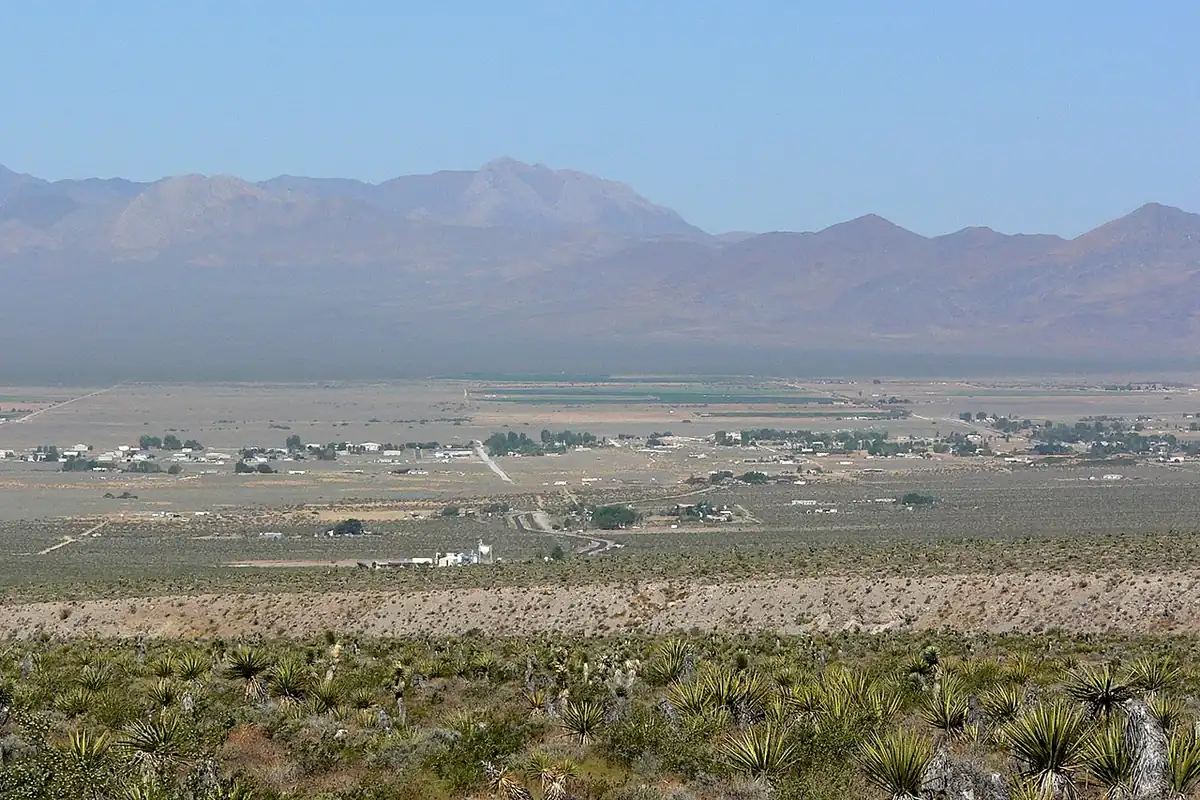
Not on the way to anywhere
Most of the places on this site sit on a corridor. Beatty is on the highway. Amargosa Valley is on the road to the park. A technician headed to any of those is often headed past somebody else anyway.
Sandy Valley is not like that. It sits in its own basin, reached on limited roads, and a technician coming here is coming here on purpose and then driving back out the same way. There is no passing trade and no combining it with a call somewhere else on the same run.
That is the honest reason a Sandy Valley call is a scheduled thing rather than a same afternoon thing. It is not a lack of interest. It is that the trip is a committed block of somebody's day, and days out here have a fixed number of hours in them.
What it costs and why
The structure is the same everywhere the technicians we refer work. A trip fee of $75 to $150 gets a truck to your rig and typically covers something like the first 30 miles, with a per-mile charge past that. Labor runs $125 to $175 per hour, one hour minimum, parts on top. The full breakdown is on the cost page.
Ask for the trip fee up front. Out here you want that number said out loud before anybody rolls, and any decent technician will give it to you without being pushed. It is not a penalty for living somewhere quiet. It is fuel and an hour or more of driving each way, and it is the price of a workshop coming to a place that does not have one.
The practical response is the same one that applies anywhere the drive is the expensive part: batch the work. If somebody is making that trip, do not spend it on a single small thing. Have the list ready, describe all of it on the phone so the right parts are on the truck, and get the whole rig sorted in one visit. The second and third job costs only labor. The drive is already paid for.
Worth knowing on parts: this is not a parts region. A common capacitor is on the truck. A specific control board for a discontinued fridge is not, and it may take days to arrive, at which point you are looking at a second trip out. Say the model and the symptom on the first call so that gets sorted before anybody drives, not after.
Rig on your property and a list of things to sort? Describe it on the phone.
These are private property rigs
Almost nothing here is a resort call. The RVs in Sandy Valley are on private land: parked beside a house, sitting on a rural lot, tucked behind a fence, or serving as somebody's actual residence while something else gets built or does not.
That shapes the work in ways worth naming.
The rig that has not moved in years. The classic rural-lot coach. It is comfortable, it is not going anywhere, and nobody has been up on the roof since the Obama administration. In this climate that is a specific and predictable list: lap sealant around every vent and skylight cracked by UV, a membrane that has chalked and thinned, slide seals gone brittle, awning fabric stiff enough to tear in the first real wind, batteries long dead, and tires that look fine and are not.
The roof is the one that costs money if ignored, because it fails silently. Water gets in, travels, and shows up a year later as a soft wall or a stained ceiling. At that point the bill is not sealant, it is the damage. A reseal is routine maintenance and it is cheap next to what it prevents, and out here it wants doing more often than the manual suggests. See the roof page.
Slides, which is where it gets serious. A slide problem caught early is a seal or an alignment, meaning a service call and an hour or two. A slide problem caught after two seasons of water quietly getting into a laminated floor is the most expensive repair on the coach and it is not close. That gap is not a range, it is two different jobs with one shared symptom, which is exactly why there is no slide number anywhere on this site.
Off grid and half grid setups. Some lots here have full power, some have an extension cord and a hopeful expression, some have solar and a battery bank and a generator. All three are normal. All three change the diagnosis, so tell the tech which one you are before they arrive. A rig with no shore power cannot be tested the way a plugged in rig can, and an electrical fault on a system that is half solar and half generator is its own puzzle. The generator page covers the part of that which fails most.
Getting a truck to the actual rig
Be straight about your access. A service truck is loaded with parts, tools, and a ladder rack, and it is not a high clearance vehicle. A driveway or a track that your own truck treats as unremarkable may be a genuine problem for it. Gates, cattle guards, soft sand, and a last stretch that is more suggestion than road are all worth mentioning.
Nobody is going to refuse the job over it. They will plan for it, which is the entire difference between a tech arriving prepared and a tech turning around at your gate having burned two hours. Give them the description, a landmark, and any code they will need.
What is in scope
The technicians we refer work on the house: appliances, HVAC, roof and leaks, slide outs, awnings, generators, solar, batteries and electrical, water and waste, leveling, hitches, brakes and bearings. Not the engine, transmission, or chassis of a motorhome, which belongs to a truck shop. No collision work and no towing. On a trip this long, finding that out on arrival is an expensive lesson for everybody.
Nearby
The technicians we refer are based in Pahrump, over the hills, and they also cover Indian Springs on the highway toward Las Vegas. If you are closer to the Vegas side than to Pahrump, that page is worth reading, because who you should call is partly a geography question.
Get connected with a licensed local RV technician.