Service area
Mobile RV repair in Amargosa Valley, NV
Amargosa Valley is not really a town, it is a lot of land with people scattered across it, sitting between Pahrump and the eastern edge of Death Valley. That geography is the whole story of what an RV call costs here and how you should plan it. Call to get connected with a licensed local RV technician.
Spread out is the defining fact
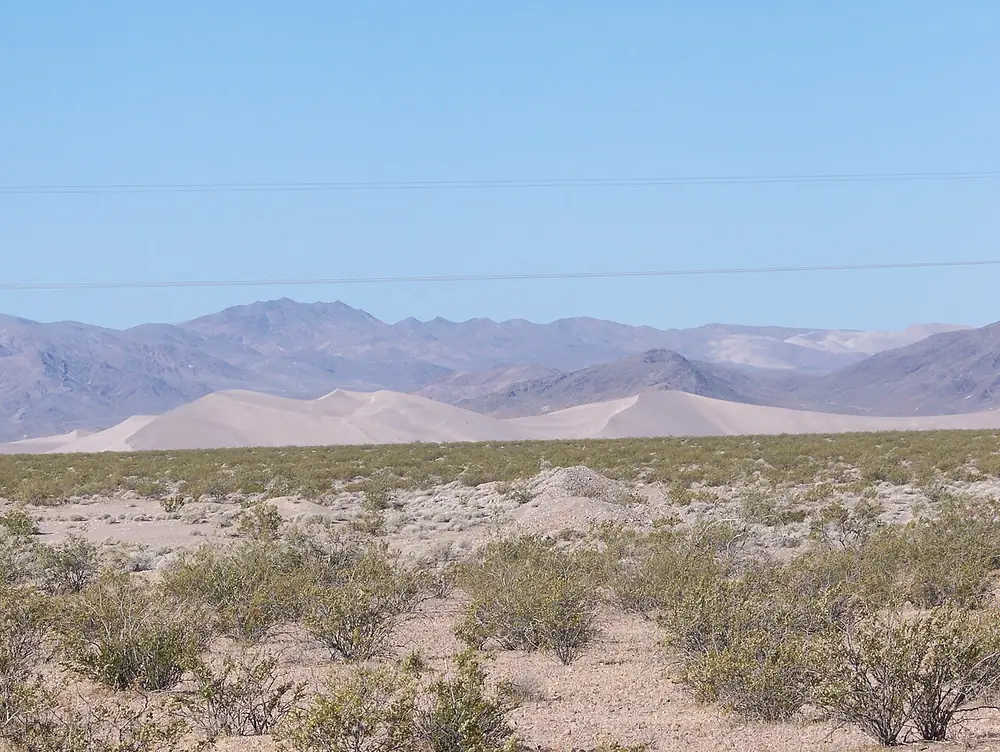
Most places called a valley have a middle. This one has addresses that can be a long way from each other and from anything else, connected by long straight roads with big gaps between anything worth stopping at. Two neighbours out here can be further apart than opposite ends of a town.
That matters because of how mobile RV pricing works. A trip fee of $75 to $150 gets a truck to your rig, and it typically covers something like the first 30 miles, with a per-mile charge past that. Amargosa Valley is out past the free part. Then labor runs $125 to $175 per hour with a one hour minimum on top.
None of that is padding, and it is worth saying plainly rather than burying it. Somebody is driving a truck loaded with parts across open desert to reach you, and then driving back. That is a real chunk of a working day that they are not spending on three easy calls in Pahrump. The mileage is the honest price of being where you are, and anyone advertising a free trip charge out here has simply moved the number somewhere else in the bill. The cost page breaks the whole structure down.
So batch the work
Here is the practical consequence, and it is the single most useful thing on this page.
If you are getting a technician out to Amargosa Valley, do not call them for one thing. The drive is the expensive part and you are paying for it either way, so the marginal cost of the second and third job while they are standing there is just labor. That is a genuinely different economics than a call in town, where it barely matters.
Make the list before you call. The fridge that has been iffy. The water heater you have been ignoring. The awning arm. The roof you have not looked at since you bought the rig. Batteries. The step that sticks. Say all of it on the phone so the tech brings the right parts, because a second trip out here for a part is another trip fee and another day, and Pahrump is not a parts town to begin with. A common capacitor is on the truck. A control board for a discontinued fridge is not, and it may take days.
Got a list rather than one problem? That is the right way to call out here.
Rigs on your own land
A lot of the RVs out here are not visiting. Land is cheap and parcels are big, and there is a long tradition in this valley of people living in a rig on their own ground, sometimes while they build something, sometimes indefinitely, sometimes because that is simply the arrangement that suits them.
That produces a specific kind of coach and a specific kind of failure list. A rig that is functioning as a house does not get the gentle treatment a vacation trailer gets. Everything runs constantly. The fridge never gets a rest, the water system is in daily use, and the roof has been in this sun every day for years rather than a few weeks a summer.
The failures that follow are predictable. Lap sealant around every vent and skylight goes brittle and cracks, and the leak that starts there does not announce itself. It shows up a year later as a soft spot in a wall or a stain on a ceiling, and by then you are not paying for sealant, you are paying for the damage. In this climate a roof inspection is the single best money an RV owner spends, and on a rig that is your actual house it is not optional maintenance. The roof page covers it.
Slide seals go the same way, and that is where it gets expensive. Caught early, a brittle seal or a mechanism out of adjustment is a service call and an hour or two. Caught after water has been getting into a laminated floor for a couple of seasons, it is the most expensive repair on the whole coach. There is no honest range between those two, because they are not the same job.
Off grid means the generator is not optional
Plenty of rigs out here are boondocking in the real sense: no shore power, no hookups, running on solar and batteries and a generator. That changes what counts as an emergency.
In an RV park, a dead generator is an inconvenience you deal with next week. On a parcel with no grid connection in a Nevada summer, the generator is what runs the air conditioning, and the air conditioning is what makes the rig survivable. That moves it from a maintenance item to the thing keeping you comfortable and, in July, safe. Same for the battery bank and the solar controller. See the generator page.
It also means the diagnosis is different. A tech arriving at a rig with no shore power cannot just plug in and test. Mention it when you book, because it changes what they bring and how they approach the whole call.
The last mile is a real question
Say the honest thing on the phone about what your access actually looks like. A service truck loaded with parts, tools, and a ladder rack is not a high clearance vehicle, and a road that your truck handles fine may not be a road that vehicle should be on. This is not a technician being precious. It is that getting stuck out here wastes an entire day for both of you.
Told in advance, a tech plans for it. Told on arrival, they turn around. Give them the description, give them a landmark, and give them a gate code if there is one.
Nearby
The technicians we refer come out of Pahrump, which is where the shorter and cheaper calls are, and they run up the corridor to Beatty and west into Death Valley. If you are anywhere along that line, it is worth asking whether a tech is already headed out your way.
Get connected with a licensed local RV technician.